An Olive Grove Is a Decision About Time
What it means to own a grove rather than a garden — and how the rhythm of olives reshapes a life around them.
By Samuel Vaden
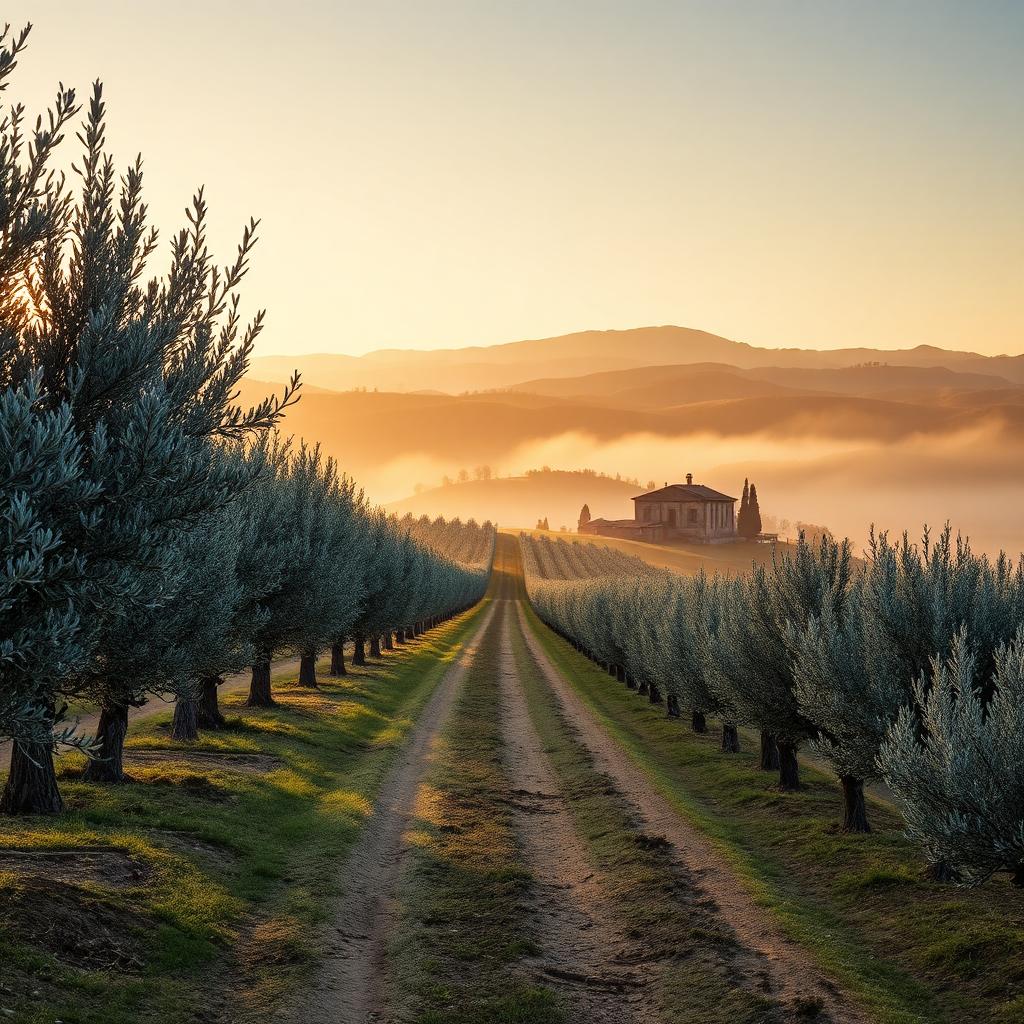
The olive tree is the longest commitment available in residential real estate. A serious grove contains trees of three hundred, five hundred, sometimes a thousand years. They were planted by someone whose name is not recorded, tended by twelve generations whose names are not recorded, and they will be there long after the current owner is also not recorded. To acquire a grove is to step briefly into the middle of an extremely long sentence and to try not to interrupt the meaning.
We have walked clients through groves in Tuscany's Maremma, in Puglia's Valle d'Itria, in the Sabine hills north of Rome, in Andalusia, on Lesbos, in the Peloponnese, on the Côte d'Azur above Menton. Each grove is its own thing. The Tuscan groves tend toward the Frantoio and Leccino cultivars and produce the green, peppery, almost throat-catching oil that defines the central Italian style. The Puglian groves - many of them monumental, with trunks the size of small rooms - produce the rounder, more golden oil of the south. The Spanish groves are vast and machine-friendly, organized for the Picual and Arbequina that dominate world production. Each grove writes a different oil because each grove is a different conversation between cultivar, soil, altitude, and the precise week of harvest.
What surprises clients most, the first time they spend a real autumn on a property, is the rhythm. The olive year is not a metaphor. It is a calendar. Pruning happens in late winter, before the sap rises - a slow, daily walk through the trees with hand shears, opening the canopy so the next year's fruit will get sun. Spring is flowering, then a long quiet summer of irrigation and waiting. Veraison, when the olives turn from green to violet to black, happens through October. Harvest begins, on most estates, in the first week of November and ends, in a good year, by Christmas. The oil is pressed within hours of picking, while the polyphenols are still vivid. Then there is the slow settling, the racking, the bottling in February or March. Then it begins again.
“One does not buy an olive grove. One inherits an obligation to a tree that was already old when one's grandparents were born.”
For a client who acquires a grove, the question is not whether to farm it but how. The least serious option is to lease the trees to a neighboring producer who will harvest them and pay in oil or in a small share. This keeps the trees alive and the land worked, which is a real virtue, but it transfers the relationship to someone else. The more serious option is to retain a local frantoiano and a small year-round team and to produce the estate's own oil - usually a few thousand bottles, sometimes labeled, sometimes given to friends. The most serious option, which we counsel only when the client genuinely wants to live in the rhythm, is to be present for harvest. To put on the canvas trousers, to climb into the nets, to drive the small tractor to the mill, to taste the first oil from the spout while it is still warm. This is not agritourism. It is the difference between owning a grove and belonging to one.
There are practical dimensions worth saying plainly. A productive grove of even modest size - say, three hundred trees - requires real labor and real expense. Pruning alone is a meaningful annual line item. Equipment, irrigation, sanitary maintenance against the olive fly and Xylella, mill fees, bottling, certification if one wants DOP or organic status, all add up. A grove almost never pays for itself in oil. It pays for itself in the way it organizes the year and the way it locks the residence into the surrounding agricultural community. The neighbors who harvest with you in November are the neighbors who watch the property in March.
The clients who come to this most happily are the ones who understand, before they begin, that they are not buying a feature of a residence. They are accepting an inheritance from people they will never meet, with the obligation to hand it forward in better condition than they received it. The trees do most of the work. The owner's job, mostly, is to not get in the way - and to be there, in some autumns, when the first oil runs.